Practice Real Technicals and Behaviorals
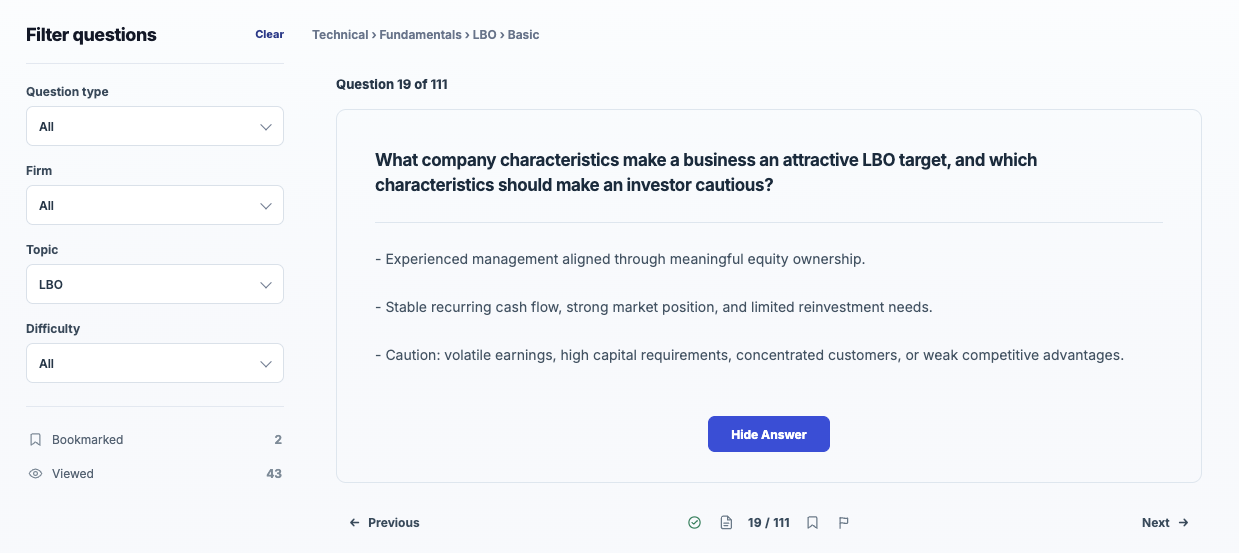
Go from learning the industry to answering interview questions with a structured library built for every stage of recruiting.
Practice Real Technicals and Behaviorals
Learn the Technicals, All in One Place
Practical answers for recruiting, interviews, and the job.
↗ 1,000+ Interview questionsTechnical and behavioral practice with clear explanations.
↗ 50+ Firms coveredFirm-specific questions and interview preparation.
↗
























See how networking, applications, and interview preparation fit together—and what to prioritize at each point in the process.
Read the recruiting guideA straightforward look at deals, capital raising, financial analysis, and the analyst’s role on a live transaction.
Build an application process that keeps timing, contacts, and firm preferences organized.
Find the right bankers, write stronger outreach, run better calls, and follow up without losing momentum.
Move from accounting through valuation, DCFs, merger models, and LBOs in an order that makes each topic easier to retain.
Shape specific, memorable answers for your background, motivation, strengths, and recent-deal discussions.
Understand the timeline and how every step connects.
↗ 2) NetworkingBuild relationships that support a thoughtful candidacy.
↗ 3) TechnicalsLearn accounting, valuation, DCFs, merger models, and LBOs.
↗ 4) BehavioralsBuild a clear story and prepare specific answers for fit questions.
↗ 5) ApplicationsStay early, organized, and deliberate about every submission.
↗ 6) InterviewsCombine technical preparation with a convincing story.
↗ 7) Bank ExperiencesReview firm-specific interview questions, experiences, and preparation guidance.
↗ 8) On-the-jobUnderstand analyst work, banking teams, transactions, and daily responsibilities.
↗ 9) CareerExplore groups, career paths, and the decisions that shape your experience.
↗Bulge bracket, elite boutique, and middle market banks can all provide strong investment banking experience, but the day-to-day work can look very different. Bulge brackets typically offer broad global platforms, formal training, extensive resources, and exposure to large, complex clients and transactions. Elite boutiques concentrate on high-value advisory work such as M&A and restructuring, often using leaner teams that can give junior bankers more responsibility. Middle market banks generally serve smaller or founder-led companies, where analysts may follow more of a process from pitch through closing and work closely with senior bankers. Compensation, hours, mentorship, and exit opportunities still vary widely by office and group. The best choice depends on the clients, products, team structure, training, deal flow, and culture you want, not simply the category that sounds most prestigious.
Read the guide